
The warning
IEA Director Fatih Birol put a number on it last week: Europe has "maybe six weeks or so" of jet fuel left. He called the situation "stunning." No jet fuel has passed through the Strait of Hormuz since the war began, and the strait normally supplies about 40% of what European airports burn.
IATA Director General Willie Walsh backed up the timeline on April 17. "By the end of May we could start to see some cancellations in Europe for lack of jet fuel," he said.
That timeline starts now.
Airlines are not waiting
Carriers across Europe, Asia and North America have already begun pulling flights. The cuts range from trimming frequency to shutting down entire subsidiaries.
Europe:
- KLM pulled 80 round-trip routes from its Amsterdam Schiphol schedule over the coming month
- Lufthansa closed its CityLine regional arm, parking 27 jets, and fast-tracked retirement of its thirsty A340-600 widebodies
- Swiss subsidiary Edelweiss dropped Denver and Seattle from its network and scaled back Las Vegas service
- British Airways axed its Jeddah route; Virgin Atlantic killed its London-Riyadh connection less than a year after launching it
- Ryanair said it "cannot rule out risks to fuel supplies at some airports in Europe" if the crunch stretches past May
The rest of the world:
- United trimmed its schedule by 5% through September
- Delta flagged $2.5 billion in extra quarterly fuel spending and pulled back capacity 3.5%
- Norse Atlantic stopped flying to Los Angeles entirely
- Qantas slashed US services and 5% of domestic flights, warning of A$800 million in added fuel costs
- Cathay Pacific thinned Asia-Pacific frequencies by 2% and cut 6% at its low-cost arm HK Express
- Air Canada scrapped its Montreal-JFK and Toronto-JFK connections
Global capacity for May is down roughly 3 percentage points from plan. A telling sign: Ryanair, Virgin Atlantic and EasyJet have all declined to forecast beyond mid-May. The industry, it seems, has no visibility past the fuel cliff.
The price spike behind the cuts
Between late February and early April, US jet fuel nearly doubled. EIA data shows the price climbed from $2.50 per gallon on February 27 to $4.88 by April 2, a 95% jump in five weeks. At US airports, the average Jet-A price reached $8.63 per gallon this month, $1.77 higher than March, based on Aviation Research Group US data covering more than 200 airports.
In Singapore, where Asian jet fuel is benchmarked, middle distillate prices smashed records above $290 per barrel, according to the IEA's April report.
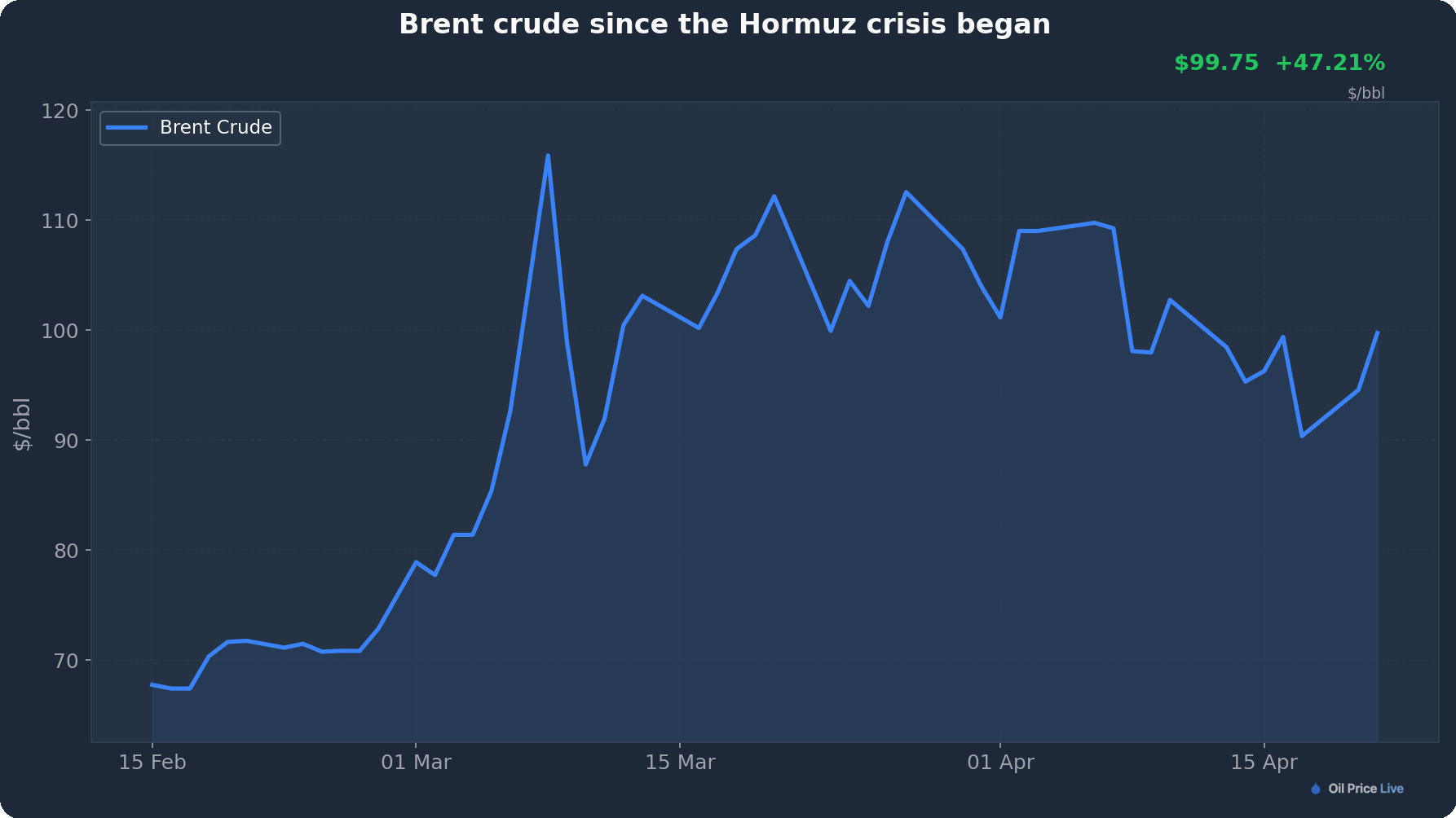
Brent crude itself tells the story. It traded below $75 in mid-February and sits near $100 today.
Passengers are paying
Fares for domestic flights booked a month or so out have jumped about 15% compared with last year. Airlines have also stacked on fuel surcharges and hiked baggage fees to cover the gap.
The bigger risk for summer travelers is not the price. It is whether the route still exists. Short intra-European hops are likely the first to go because long-haul flights generate more revenue per seat and carriers will fight to keep them. That leaves multi-city European trips at risk, especially itineraries routed through smaller regional airports.
The US is insulated, for now
America's own refineries can supply most of the country's jet fuel needs, which means US airports face a price problem more than a physical shortage. Europe and parts of Asia, which depend on imported kerosene, face the real crunch.
But "insulated" has limits. US carriers still fly into airports that may not have fuel. And higher fuel costs for American airlines translate directly into higher fares and fewer seats.
What breaks the cycle
Only one thing brings the jet fuel back: oil flowing through Hormuz again. The ceasefire between the US and Iran expires Tuesday, and neither side has confirmed it will show up for talks. If the strait stays shut through May, Birol's six-week clock runs out. After that, Europe's airlines will not have a choice about cutting flights. The fuel simply will not be there.