
No US vice president has ever done this before
No sitting American vice president has ever negotiated directly with Iranian officials. On Friday, that changed inside the Serena Hotel in Islamabad's Red Zone, where Vice President JD Vance and Iranian Parliament Speaker Mohammad Bagher Ghalibaf opened face-to-face talks on ending the six-week war between Washington and Tehran.
The format had been uncertain all week. Pakistan initially planned shuttle diplomacy, with the two delegations occupying separate rooms. But Iranian sources confirmed to CNN that the talks shifted to direct, making this the highest-level in-person engagement between the two countries since the 1979 Islamic Revolution. Even the Kerry-Zarif nuclear talks of 2013-2015 were conducted at the foreign minister level.
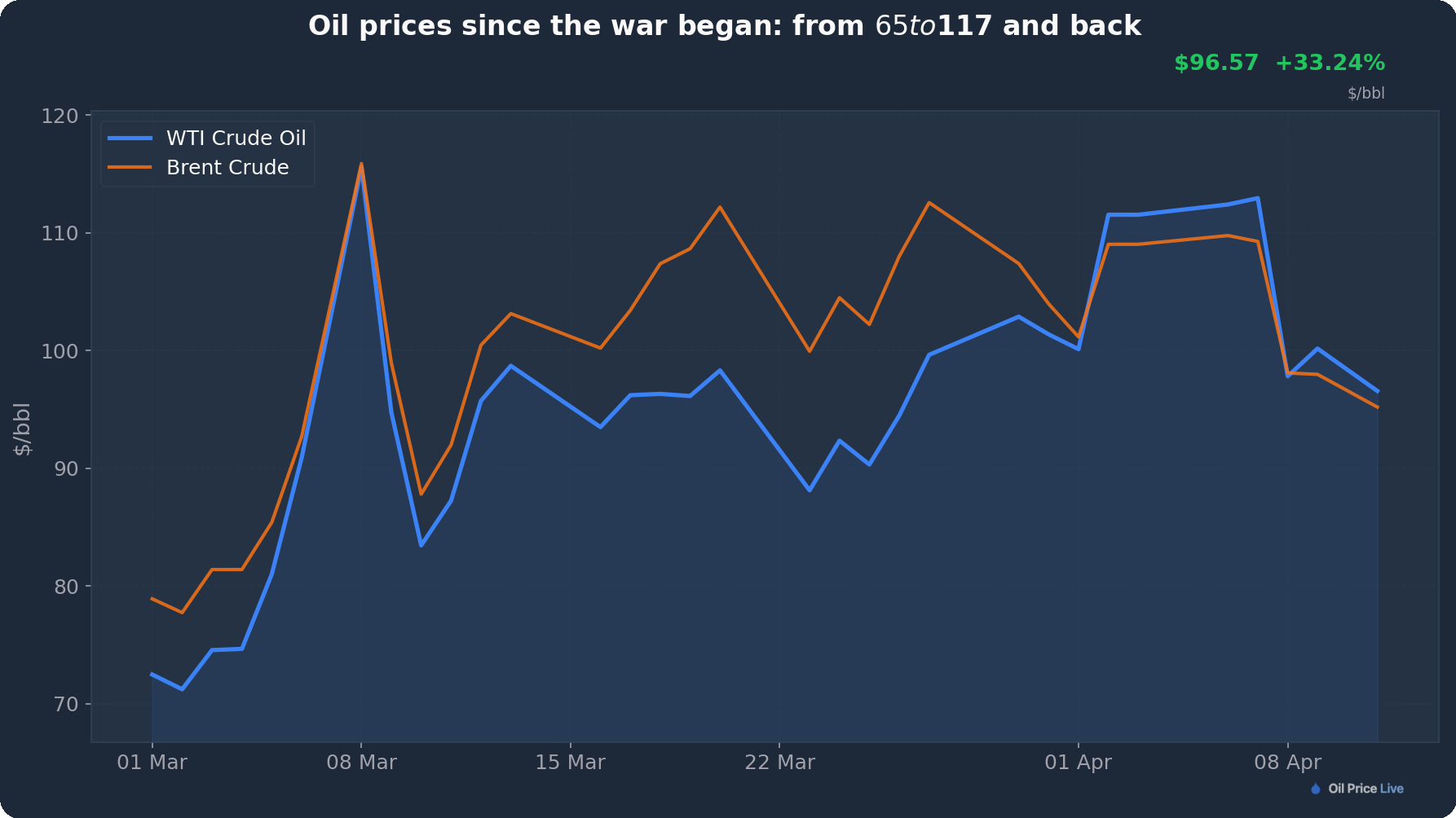
WTI crude traded at $96.57 on Friday and Brent at $95.20, both down sharply for the week but still $30 above pre-war levels. Markets are pricing in peace. The question is whether the people in that room can deliver it.
Who is in the room
The American side is led by Vance, flanked by special envoy Steve Witkoff and presidential adviser Jared Kushner. A 30-member advance team arrived ahead of them to set up security.
Iran sent 71 people. Ghalibaf, a former IRGC Air Force commander turned politician, leads the delegation. Foreign Minister Abbas Araghchi, who served under lead negotiator Mohammad Javad Zarif during the 2015 nuclear talks, brings years of experience dealing with Western counterparts. Hardline negotiator Ali Bagheri Kani rounds out the trio at the top.
Pakistani Prime Minister Shehbaz Sharif met both delegations ahead of the session. Army Chief Asim Munir, who helped broker the original ceasefire on April 7-8, and Foreign Minister Ishaq Dar are facilitating.
Vance's visit is the first by a sitting US vice president to Pakistan since Joe Biden traveled there in 2011.
Five sticking points, no easy answers
The two sides entered the Serena Hotel with positions that barely overlap. Here is what divides them:
The Strait of Hormuz. Iran wants recognized sovereignty over the waterway and the right to collect transit tolls. Washington wants unconditional reopening. Only a handful of ships have passed through since the ceasefire took effect, and the strait remains functionally closed. Trump posted on Truth Social that "all 28 of their mine dropper boats are also lying at the bottom of the sea," though Hormuz traffic data does not reflect any meaningful reopening.
Lebanon. This is the deepest fault line. Iran insists the ceasefire covers Lebanon. Israel says it does not, and Israeli strikes on Lebanese targets have continued throughout the truce. Iran temporarily shut Hormuz entirely after one round of Israeli bombing. Without agreement on Lebanon, the ceasefire framework cannot hold.
Frozen assets. Washington has reportedly agreed in broad terms to unfreeze Iranian funds held in international banks, though the specifics are far from settled. Tehran sees this as overdue. Washington sees it as leverage.
Uranium enrichment. Iran's 10-point proposal demands recognition of its right to enrich uranium. This is a non-starter for the US, which wants Iran to surrender its stockpiles. Neither side has shown flexibility.
US military presence. Iran wants American combat forces withdrawn from the Middle East. The Pentagon has roughly 50,000 troops in the region, a number that surged during the conflict.
Trust is the real deficit
Ghalibaf summed up the atmosphere in a single line before sitting down: "We have goodwill. But we do not have trust."
Vance struck a harder tone, warning Iran not to "try to play us" during the negotiations. Trump, speaking from Washington, said the talks had started and described them as productive.
Analysts are skeptical. Masood Khalid, a former Pakistani ambassador, told Al Jazeera the atmosphere was "poisoned" before talks began, with Israeli strikes designed to harden positions and derail progress. Sahar Khan, a foreign policy researcher at the Institute for Global Affairs in Washington, called the lack of trust "the biggest obstacle."
There is also a structural problem. Israel, whose military operations triggered Iran's ceasefire complaints, is not at the table. That absence gives Netanyahu room to undermine any agreement he does not like, without ever having been party to it.
What this means for oil
The ceasefire knocked WTI from $117 to $92 in less than 48 hours, the largest single-day crash since 1991. Prices have since stabilized in the mid-$90s, reflecting cautious optimism that some resolution will emerge.
But the physical market tells a different story. Gulf oil producers have shut in roughly 9.1 million barrels per day in April because they cannot export through Hormuz. Saudi Arabia's only alternative pipeline, the East-West Petroline, just lost 700,000 bpd of throughput to an Iranian strike. Strategic petroleum reserves are being drawn down globally.
If the Islamabad talks produce a framework for reopening Hormuz, crude could drop back toward $80 within weeks. If they collapse, the two-week ceasefire expires around April 22, and oil almost certainly retests $110 or higher.
Iran's top security body has signaled the negotiations might stretch as long as 15 days. Markets will not wait that long for a signal. Every leaked quote, every hallway photo, every post from Trump will move barrels.
The diplomatic ice between Washington and Tehran just cracked at the highest level in history. Whether it breaks open or refreezes depends on what happens next inside the Serena Hotel.