
The damage nobody is pricing in
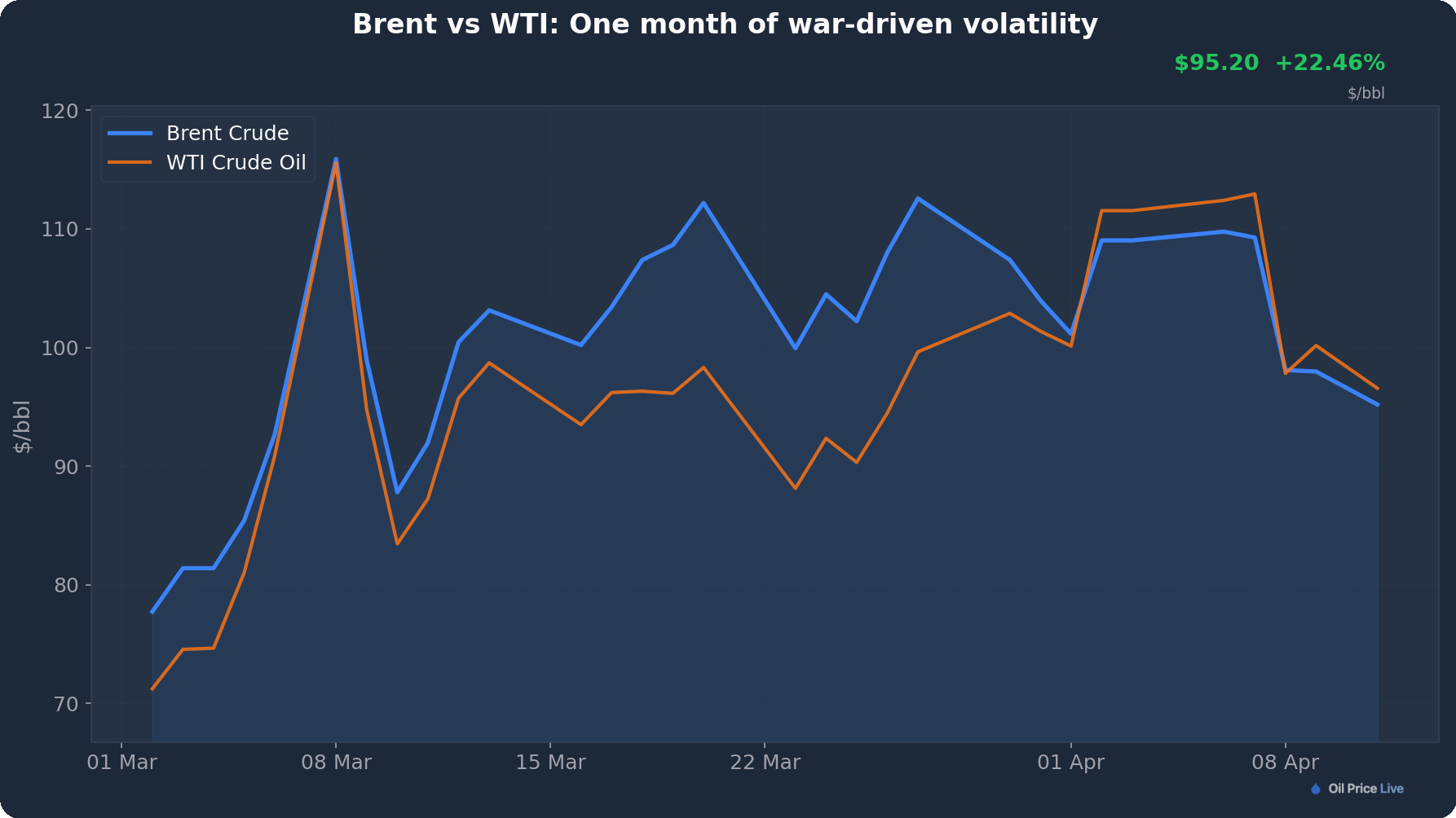
Markets spent this week focused on ceasefire talks in Islamabad and the oil price retreat from $117 to $96. Buried in that noise was a disclosure that changes the recovery math entirely.
Saudi Arabia confirmed on Wednesday that Iranian strikes knocked 600,000 barrels per day of production capacity offline. The Manifa field lost 300,000 bpd and Khurais lost another 300,000. One worker was killed. Seven were injured. The physical toll on people and infrastructure was severe.
That headline alone would move markets in normal times. The real problem, though, sits 1,200 kilometers to the west.
The pipeline that was supposed to save them
Iran struck a pumping station on the East-West Pipeline, slashing its throughput by 700,000 barrels per day. This is not just another piece of damaged asset. The East-West Pipeline, stretching 1,200 km from Abqaiq in the Eastern Province to Yanbu on the Red Sea, is Saudi Arabia's only crude export route that does not pass through the Strait of Hormuz, where Iran has laid sea mines.
Saudi Aramco finished a crash expansion of the Petroline in mid-March, converting parallel NGL lines to crude service and pushing total capacity to roughly 7 million barrels per day. It was the kingdom's ace card, a way to keep exports flowing while Hormuz stayed shut.
That ace just got weaker. The 700,000 bpd throughput cut drops effective pipeline capacity to around 6.3 million bpd. Pair that with 600,000 bpd of field production lost at Manifa and Khurais, and Saudi Arabia has shed 1.3 million barrels per day of combined output and export capacity in a single wave of strikes.
In a market already short millions of barrels from the Gulf shutdown, losing another 1.3 million bpd is not a rounding error. It is the difference between a tight market and an acute physical shortage for refiners who depend on Saudi grades.
2019 this is not
Saudi officials have pointed to the 2019 Abqaiq-Khurais attack as proof that Aramco rebuilds fast. That September, roughly 25 drones and cruise missiles knocked out 5.7 million bpd, half the kingdom's output. Aramco brought it back within two weeks.
The comparison breaks down fast. In 2019, wells and pipelines went untouched. Damage hit processing equipment at Abqaiq, specifically stabilization towers and separation drums, where Aramco had spare trains and replacement parts in warehouses nearby. Nobody was shooting at repair crews the following morning. Contractors flew in from abroad within 48 hours.
None of that applies now. Pipeline repairs in an active war zone follow a different clock. Damaged trunk lines need excavation, pipe replacement, and weeks of pressure testing before crude flows through them again. Every repair crew working on a known military target risks becoming a casualty if strikes resume.
For reference: when ISIS repeatedly hit Iraqi export pipelines during 2014-2017, repairs routinely dragged on for three to six months. Not because the welding was complicated, but because security conditions wouldn't let crews stay on site long enough to finish.
The ceasefire doesn't fix this
Suppose the Islamabad talks produce a durable agreement and the Strait of Hormuz reopens next month. Saudi Arabia still faces a long climb back. Field damage at Manifa and Khurais, particularly to the gas-oil separation plants that turn raw wellhead fluid into exportable crude, could take two to four months for partial restoration. Full capacity might not return for six months or more.
The Petroline pumping station is the immediate bottleneck. Sourcing specialized rotating equipment, getting it to a remote desert location, and installing it under potentially hostile conditions is a multi-month job at the absolute best. Until it is fixed, Saudi Arabia cannot push the full 7 million bpd it needs through its only functioning export corridor.
The truce itself looks fragile. Israel insists the ceasefire does not extend to its operations in Lebanon. Iran's 10-point plan includes demands like sovereignty over Hormuz and uranium enrichment rights that Washington has flatly rejected. If talks collapse, every repair timeline doubles.
There is also the question of reservoir health. Both Manifa and Khurais rely on water injection to maintain underground pressure and keep crude flowing. Extended shutdowns without proper maintenance can cause permanent production losses that no amount of pipe welding can reverse. Manifa's heavy-crude geology presents well-documented technical challenges, and prolonged downtime only makes them worse.
What markets should watch
Brent crude traded at $95.20 on Friday and WTI at $96.57, both well off last week's $117 spike. The selloff reflects ceasefire optimism and aggressive hedge-fund profit-taking. It does not reflect the physical reality on the ground in Saudi Arabia's Eastern Province.
Three things worth tracking in the weeks ahead:
-
Yanbu loading data. Satellite tracking of tankers at Yanbu will show whether Saudi Arabia is actually pushing crude through the damaged pipeline, and at what volume. Any sustained drop below 5 million bpd would signal the throughput hit is worse than disclosed.
-
Aramco force majeure notices. Saudi Aramco supplies roughly 15% of all internationally traded crude oil under long-term contracts. If the company extends or broadens force majeure declarations, Asian refiners in Japan, South Korea, and India will scramble for replacement barrels in a market where spares barely exist.
-
Insurance and contractor deployments. International service firms like Schlumberger, Halliburton, and Baker Hughes will not send repair crews until war risk insurance is obtainable at reasonable rates. If premiums stay prohibitive, Aramco must lean on in-house teams alone. That slows everything down.
The market is trading the ceasefire headline. The infrastructure damage underneath tells a different story, one measured in months rather than news cycles.